
The Power of LEDs: The Science Driving the 2026 Era of LED Light Therapy
Share
The Power of LEDs:
The Science Driving the 2026 Era of LED Light Therapy
What gives LEDs their power — and why are some devices effective while others are not? The engineering principles behind modern LED light therapy, explained clearly.
LED light therapy is no longer a beauty trend — it is a scientifically grounded technology shaping the future of dermatology, skin longevity and at-home clinical care. As LED masks become mainstream, advanced devices are redefining how people treat acne, ageing, inflammation and skin recovery — safely, non-invasively and consistently.
But what actually gives LEDs their power? And why do some devices deliver real results while others are little more than a glow? This article explains the science behind LED light therapy and why it has become a cornerstone of modern skincare.
What is LED light therapy?
LED (Light-Emitting Diode) light therapy is a non-invasive treatment that delivers specific wavelengths of light into the skin to stimulate biological processes. Unlike UV light, LEDs do not damage DNA or burn the skin — instead, they act as a cellular signal, encouraging repair, regeneration and balance.
Photobiomodulation research has been studied across dermatology, sports medicine and wound healing for decades, and has since been adopted by dermatologists, medical researchers and aesthetic professionals worldwide. Today, thanks to advances in LED engineering, these same principles are available in medical-grade at-home devices.
Photobiomodulation: how LEDs communicate with skin cells
The scientific mechanism behind LED therapy is known as photobiomodulation (PBM). When LED light reaches the skin, it is absorbed by chromophores inside cells — particularly within the mitochondria. One of the most important enzymes involved is cytochrome c oxidase, which plays a key role in cellular energy production.
This interaction triggers measurable biological effects:
- Increased ATP — cellular energy production
- Reduced oxidative stress
- Modulation of inflammation pathways
- Improved cell signalling and repair
In short, LED light does not force change — it optimises cellular function, allowing the skin to heal and perform more efficiently on its own.
Why wavelength precision matters
Not all LED light works the same way. Each wavelength penetrates the skin to a different depth and triggers a distinct biological response. This is why effective LED therapy relies on multi-wavelength systems, not a single colour.
Targets the skin's surface, where it is scientifically recognised for destroying acne-causing bacteria (C. acnes), reducing active breakouts and helping control oil imbalance. Controlled dosing is critical — well-engineered devices balance efficacy while minimising oxidative stress.
Penetrates mid-skin layers. Commonly used for reducing visible redness, supporting sensitive or reactive skin and improving overall skin tone balance — a key wavelength in calming and recovery protocols.
Penetrates the dermis, where collagen and elastin are produced. Associated with increased collagen synthesis, improved skin elasticity, reduction of fine lines and faster skin repair — making it essential for anti-ageing LED therapy.
Penetrates deeper than visible light. Its effects include enhanced circulation, reduced inflammation, accelerated tissue repair and support for deeper skin recovery — complementing red light for long-term regeneration.
Power, dose and irradiance: what most devices ignore
The biggest differentiator between effective LED therapy and marketing gimmicks is not colour — it is power control. Two parameters matter scientifically:
Irradiance is the power that drives photons through the skin barrier, while the resulting Joules represent the total energy delivered to trigger repair. Without this calculation, light therapy is merely a glow — with it, it becomes a calibrated treatment.
Too little energy produces no biological response. Too much energy reduces effectiveness — a phenomenon known as the biphasic dose response. Well-engineered LED masks operate within a therapeutic window: enough energy to stimulate cells without overstimulation. This is why medical-grade devices consistently outperform basic cosmetic lights with unpublished specifications.
Irradiance (mW/cm²) — how much light energy reaches the skin at a given moment. Energy dose (J/cm²) — how much total energy is delivered over the full session. A credible device publishes both. If a brand only advertises LED count or colour without these numbers, there is no way to verify it delivers a therapeutic dose.
Clinic vs at-home LED therapy: what has changed
Historically, LED therapy was limited to clinics due to device size and cost. Advances in LED chip density, optics and power regulation have changed that. Modern at-home LED masks now offer high-density diode distribution, multiple clinically relevant wavelengths, controlled irradiance levels and short, consistent treatment sessions.
While in-clinic treatments may still deliver higher peak power per session, consistent daily use at home often produces more sustainable long-term results — particularly for skin ageing, acne management and inflammation control, where cumulative dosing matters more than occasional high-intensity sessions.
What LED light therapy is scientifically best at
- Collagen stimulation and wrinkle reduction
- Acne management (mild to moderate)
- Reduction of inflammation and redness
- Improved wound and scar healing
- Support for hair follicle stimulation
- Overall skin quality and resilience
Importantly, results are cumulative — LED therapy works best as a consistent routine, not a one-off treatment.
The 2026 safety standard
LED light therapy is considered safe when UV wavelengths are excluded, eye protection is respected, FDA-cleared or clinically tested devices are used, and treatment protocols are followed correctly. Short-term safety is well established. As long-term research continues to evolve, device quality, power accuracy and engineering transparency matter more than ever when choosing a device.
What is photobiomodulation?
Why does wavelength matter in LED therapy?
What is irradiance and why does it matter more than colour?
Is at-home LED therapy as effective as in-clinic treatment?
- LED light therapy represents a shift in skincare — from aggressive treatments to biological optimisation, supporting the skin's natural repair systems through light-driven cellular signalling.
- Wavelength precision and published irradiance are the two factors that separate effective devices from marketing gimmicks.
- As we move deeper into 2026, LED therapy is no longer about trends — it is about precision, consistency and science.
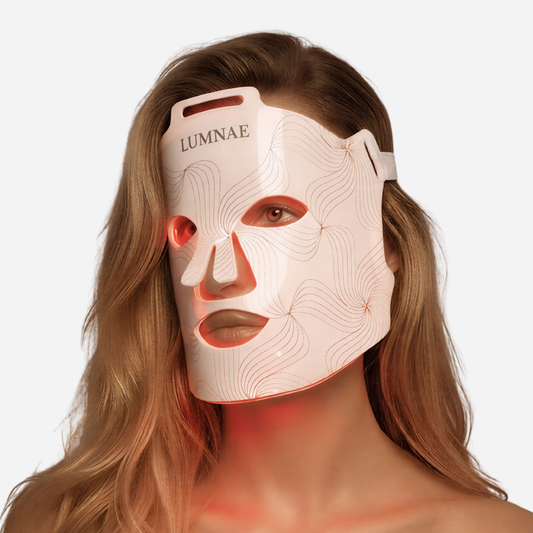
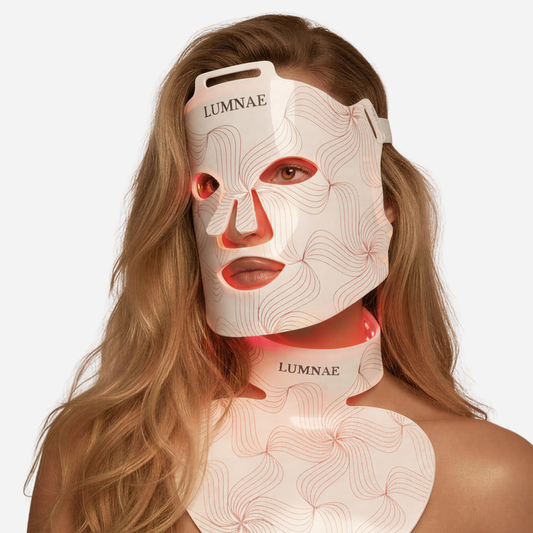
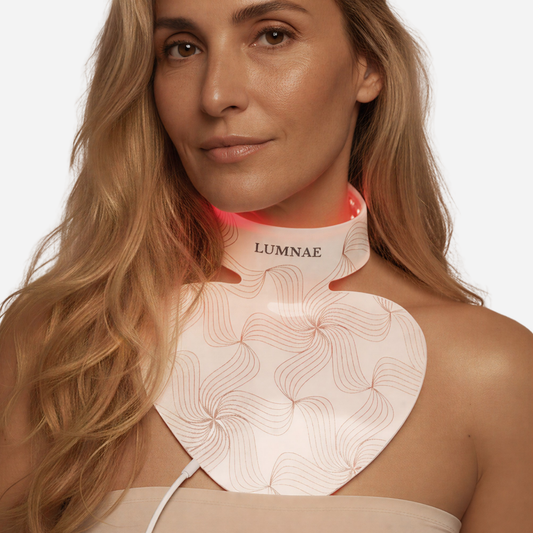
The Lumnae LED Mask — 488 medical-grade LEDs, published irradiance, FDA-cleared. Available now with free UAE delivery.
Explore the Lumnae LED MaskThis article is for educational purposes and does not constitute medical advice. Always consult a qualified healthcare professional before starting any new skincare device.